/ May 15, 2026
Trending
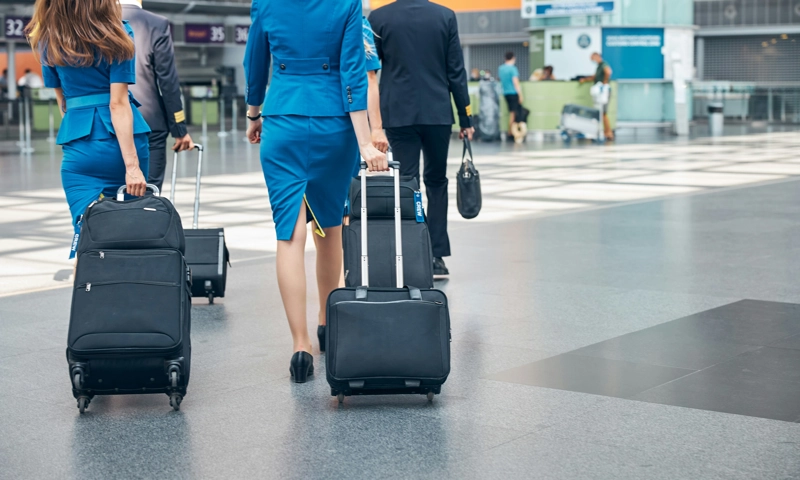

Corporate Travel 2025: Balancing Budgets, Sustainability, and Shifting Priorities – Image Credit Unsplash+
Deloitte’s latest corporate travel survey reveals a complex landscape for business travel up to 2026. While budgets are generally increasing, there is a notable shift in priorities and a growing emphasis on cost management and sustainability.
Deloitte’s latest corporate travel survey reveals a complex landscape for business travel up to 2026. While budgets are generally increasing, there is a notable shift in priorities and a growing emphasis on cost management and sustainability. The survey, conducted among U.S.-based travel managers and corporate travelers, provides insights into the evolving dynamics of corporate travel.
Key takeaways
 Company travel spend holds steady, but changes are on the horizon, according to Deloitte’s 2025 Corporate Travel Survey. The study found that 3 in 4 (74%) travel managers surveyed plan to expand budgets this year (similar to 2024), but fewer (68%) expect to do so for 2026.
Why this matters
The corporate travel market is growing moderately, but complexity abounds. Though budgets may be increasing, so are costs. At the same time, success and sustainability markers are getting increasingly complicated to measure as companies reevaluate travel’s primary benefits, potentially changing the course for their broader strategy. In 2025, the proportion of professionals traveling for work declined from 36% in 2024 to 31% in 2025. At the same time, the composition of business travelers is shifting: occasional travelers are becoming regulars, regular travelers are moving up to frequent status, while seasoned road warriors are scaling back their travel. In its new report, “Forecast in Flux: 2025 Deloitte Corporate Travel Survey,” Deloitte examines what is shaping the corporate travel landscape and what that means for travelers, their companies and travel providers alike.
Corporate travel navigates a complicated trajectory
After signs of normalization last year, shifting conditions have complicated corporate travel’s continued ascent. While the majority of companies continue to increase their travel spend, pullbacks have become more widespread, especially among larger companies.
Live events, training drive travel demand
While face-to-face connections with clients continue to be the largest driver of corporate travel, travel to connect with internal stakeholders for training and development is taking off.
“Corporate travel continues to be important to business and employee growth, but companies are facing potential turbulence as they adapt to conditions like rising costs and shifting internal priorities. This moment calls for agility and partnership between companies and their travel providers, as well as companies and their traveling employees. Understanding the goals of each trip and helping ensure the trip provides a strong return on investment is key. Meanwhile, providers who consider organizations’ travel priorities and are ready to adapt their offerings to offer the most value can be positioned to succeed long term.” Kate Ferrara, vice chair and U.S. transportation, hospitality and services sector leader, Deloitte
Costs create headwinds for return on travel investment
Amid rising costs and shifting preferences, organizations are focused more on ensuring that travel brings strong return on investments. The considerations for what generates strong ROI, however, is shifting.
Sustainability initiatives keep their course
Sustainability and environmental impact also shape corporate travel plans. Organizations are increasingly moving from simply monitoring their suppliers’ efforts to actively recommending based on factors such as emissions, certifications and chainwide standards.
“Cost considerations and sustainability measures may be charting the course for many organizations. Sustainable travel priorities are changing as many companies are no longer just measuring suppliers’ impact efforts; they are making business decisions based on them. This creates an opportunity for travel providers who understand which metrics matter most. Those who are willing to be transparent and adaptable can help ensure a smooth trajectory.” Eileen Crowley, U.S. transportation, hospitality and services leader, Deloitte
Deloitte’s “2025 Corporate Travel Report” is based on two surveys. The first surveyed 151 U.S.-based corporate travel managers between July 10 and July 23, 2025, who are tasked with company-wide travel initiatives including employee-oriented policy, supplier negotiations, duty of care, and the procurement of booking technology. The second surveyed 1,003 U.S.-based corporate travelers who took a business trip in 2024 and also traveled in 2025, fielded from July 3 to July 12, 2025. Among those corporate travelers, 215 qualified as budget owners, leaders who make travel decisions for teams or business units.
Corporate Travel 2025: Balancing Budgets, Sustainability, and Shifting Priorities – Image Credit Unsplash+
Deloitte’s latest corporate travel survey reveals a complex landscape for business travel up to 2026. While budgets are generally increasing, there is a notable shift in priorities and a growing emphasis on cost management and sustainability.
Deloitte’s latest corporate travel survey reveals a complex landscape for business travel up to 2026. While budgets are generally increasing, there is a notable shift in priorities and a growing emphasis on cost management and sustainability. The survey, conducted among U.S.-based travel managers and corporate travelers, provides insights into the evolving dynamics of corporate travel.
Key takeaways
Company travel spend holds steady, but changes are on the horizon, according to Deloitte’s 2025 Corporate Travel Survey. The study found that 3 in 4 (74%) travel managers surveyed plan to expand budgets this year (similar to 2024), but fewer (68%) expect to do so for 2026.
Why this matters
The corporate travel market is growing moderately, but complexity abounds. Though budgets may be increasing, so are costs. At the same time, success and sustainability markers are getting increasingly complicated to measure as companies reevaluate travel’s primary benefits, potentially changing the course for their broader strategy. In 2025, the proportion of professionals traveling for work declined from 36% in 2024 to 31% in 2025. At the same time, the composition of business travelers is shifting: occasional travelers are becoming regulars, regular travelers are moving up to frequent status, while seasoned road warriors are scaling back their travel. In its new report, “Forecast in Flux: 2025 Deloitte Corporate Travel Survey,” Deloitte examines what is shaping the corporate travel landscape and what that means for travelers, their companies and travel providers alike.
Corporate travel navigates a complicated trajectory
After signs of normalization last year, shifting conditions have complicated corporate travel’s continued ascent. While the majority of companies continue to increase their travel spend, pullbacks have become more widespread, especially among larger companies.
Live events, training drive travel demand
While face-to-face connections with clients continue to be the largest driver of corporate travel, travel to connect with internal stakeholders for training and development is taking off.
“Corporate travel continues to be important to business and employee growth, but companies are facing potential turbulence as they adapt to conditions like rising costs and shifting internal priorities. This moment calls for agility and partnership between companies and their travel providers, as well as companies and their traveling employees. Understanding the goals of each trip and helping ensure the trip provides a strong return on investment is key. Meanwhile, providers who consider organizations’ travel priorities and are ready to adapt their offerings to offer the most value can be positioned to succeed long term.” Kate Ferrara, vice chair and U.S. transportation, hospitality and services sector leader, Deloitte
Costs create headwinds for return on travel investment
Amid rising costs and shifting preferences, organizations are focused more on ensuring that travel brings strong return on investments. The considerations for what generates strong ROI, however, is shifting.
Sustainability initiatives keep their course
Sustainability and environmental impact also shape corporate travel plans. Organizations are increasingly moving from simply monitoring their suppliers’ efforts to actively recommending based on factors such as emissions, certifications and chainwide standards.
“Cost considerations and sustainability measures may be charting the course for many organizations. Sustainable travel priorities are changing as many companies are no longer just measuring suppliers’ impact efforts; they are making business decisions based on them. This creates an opportunity for travel providers who understand which metrics matter most. Those who are willing to be transparent and adaptable can help ensure a smooth trajectory.” Eileen Crowley, U.S. transportation, hospitality and services leader, Deloitte
Deloitte’s “2025 Corporate Travel Report” is based on two surveys. The first surveyed 151 U.S.-based corporate travel managers between July 10 and July 23, 2025, who are tasked with company-wide travel initiatives including employee-oriented policy, supplier negotiations, duty of care, and the procurement of booking technology. The second surveyed 1,003 U.S.-based corporate travelers who took a business trip in 2024 and also traveled in 2025, fielded from July 3 to July 12, 2025. Among those corporate travelers, 215 qualified as budget owners, leaders who make travel decisions for teams or business units.