/ Mar 24, 2026
Trending
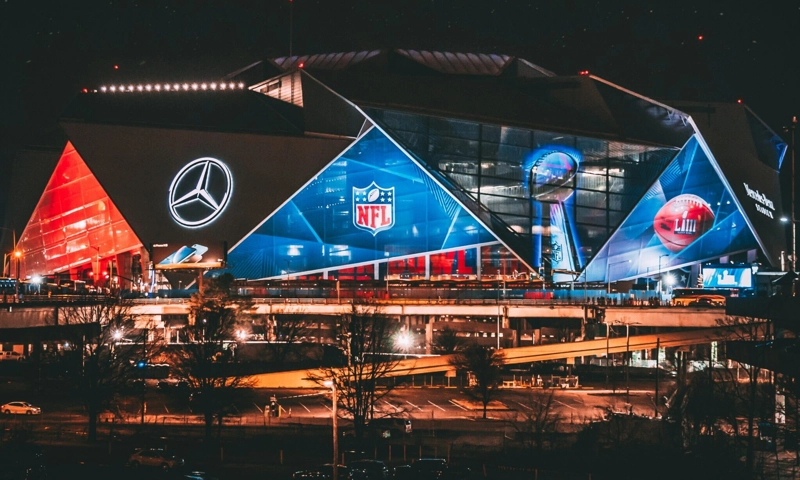

The Ecosystem Edge: Maximizing Stadium Naming Rights – By Bryan Younge – Image Credit Unsplash
The practice of selling naming rights for professional sports stadiums has grown into one of the most visible and lucrative sectors of sponsorship marketing. What was once considered a novelty—putting a corporate name on a building—has become a multi-billion-dollar industry with far-reaching implications for teams, municipalities, investors, and brand partners alike. In the NFL alone, naming rights agreements collectively generate well over a billion dollars annually, and new deals continue to climb to unprecedented valuations.
Yet the naming rights story is no longer simply about signage, media mentions, or having one’s brand on the skyline. Today, the real value is unlocked when the naming rights contract is designed as part of a fertile ecosystem—a symbiotic environment where the sponsor’s brand, the stadium, the fans, and the surrounding community are actively engaged. The name on the building becomes only one component of a broader, carefully orchestrated strategy.
This article explores how naming rights partnerships achieve their greatest potential when they are embedded in an ecosystem approach.
Drawing on examples from recent stadiums across the NFL, including Levi’s Stadium, Mercedes-Benz Stadium, AT&T Stadium, SoFi Stadium, and Allegiant Stadium, the discussion emphasizes how bundling rights, integrating branding into fan experiences, and aligning with community and business objectives elevates both the value of the property and the return on investment for the sponsor.
From Signage to Synergy: The Evolution of Naming Rights
In the early years of naming rights deals, exposure was the dominant objective. Companies sought brand recognition through sheer repetition: a logo on the scoreboard, mentions in media coverage, and presence in aerial shots of the stadium. These benefits remain important, but they have become table stakes.
As deal sizes escalated—sometimes reaching hundreds of millions of dollars—corporate sponsors demanded more. They sought platforms for activation and integration, where their brand would be experienced by fans in meaningful ways, not simply noticed on a wall or scoreboard. Naming rights have therefore evolved into comprehensive partnerships that integrate the sponsor into the broader sponsorship, media, and community ecosystem of the venue.
The contemporary view is clear: a naming rights contract is no longer a real estate transaction. It is a marketing platform designed to immerse the brand in the life of the stadium, ensuring that the investment generates measurable returns through fan engagement, loyalty, and even direct sales.
How Naming Rights Agreements Are Structured
Behind every naming rights deal lies a carefully drafted agreement that balances the interests of the stadium authority, the team, and the corporate sponsor. While terms vary widely depending on market, league, and sponsor category, most agreements share common elements that provide both financial clarity and operational expectations.
At their core, these contracts define the scope of rights granted, usually centered on exclusive use of the sponsor’s name in connection with the stadium. Surrounding that central right are provisions that cover term length, often ranging from 10 to 30 years, and financial commitments, which may be structured as escalating annual payments, upfront contributions, or hybrid models.
Beyond the financials, agreements also set forth sponsorship entitlements—the bundle of assets that gives the sponsor visibility and activation opportunities. These can include signage, media mentions, category exclusivity, VIP hospitality, digital integration, and community programming. Performance provisions are frequently built in to ensure the stadium continues to deliver exposure, for instance by requiring a minimum number of major events or maintaining certain broadcast standards.
Contracts also address termination and reassignment rights, protecting the stadium in the event of a sponsor’s financial distress or reputational issues, while giving the sponsor assurances that the venue will be operated at a level consistent with its brand standards. Dispute resolution mechanisms and governing law clauses provide a roadmap for resolving conflicts without jeopardizing the long-term relationship.
In short, naming rights agreements are highly detailed instruments. They are designed not only to monetize a sponsorship but also to ensure a durable partnership in which both stadium and sponsor have incentives to maintain the ecosystem over the life of the deal.
Bundling Rights for Maximum Impact
One of the defining features of a successful ecosystem is the bundling of rights. Instead of treating naming rights as an isolated asset, they are combined with additional sponsorship entitlements into a single package. This might include category exclusivity, in-venue branding, hospitality suites, media integration, digital content, or community outreach initiatives.
SoFi Stadium’s naming contract illustrates this approach. Its naming agreement extended beyond signage to include partnerships with the Rams, the Chargers, and the surrounding Hollywood Park development. The deal created member benefits such as expedited entry, lounge access, and integration into the venue’s digital platforms. These bundled elements transformed the stadium into a community hub for SoFi’s customers and prospects, turning an investment in naming rights into a tool for customer acquisition and loyalty.
Bundling rights ensures that the sponsor has multiple avenues to engage fans and customers, while the stadium benefits from a more deeply invested partner. The value of the contract is thus optimized for both parties.
Naming Rights and Enterprise Value vs. Tangible Asset Value
An important distinction must be made when discussing how naming rights improve the value of a stadium: the uplift occurs in the intangible enterprise value of the operating entity, not in the tangible real estate value of the building itself.
Naming rights directly impact cash flow. The contracted payments from sponsors strengthen the stadium’s revenue stream, often forming a predictable, long-term income source that underpins debt service, operational budgets, and capital reserves. This enhanced cash flow improves the financial profile of the enterprise, making it more sustainable and resilient.
Moreover, by attracting additional events, creating fan loyalty, and generating media exposure, naming rights contribute to the broader economic ecosystem surrounding the stadium. Restaurants, hotels, and local businesses benefit from increased visitation, and municipalities often point to naming rights as catalysts for higher tourism and community engagement.
The challenge arises when these intangible benefits are misunderstood. In many circumstances, assessors and taxing authorities have mistakenly treated the enhanced cash flows from naming rights as if they were embedded in the tangible real estate value of the stadium. The result has been drastically over-assessed stadium valuations, where property tax burdens were inflated on the assumption that the building itself was worth more because of its name. In reality, the naming rights contract is not a physical attribute of the bricks and steel; it is an intangible marketing agreement.
This misclassification underscores the need for clarity: the tangible property—the stadium structure—derives its value from replacement cost and market rents, while the intangible enterprise value—encompassing naming rights, sponsorships, and team operations—reflects brand, business, and contractual strength. Owners, investors, and municipalities must guard against conflating the two, ensuring that tax assessments and valuations properly allocate value to intangibles. Failure to do so has led to litigation and financial strain in numerous markets.
Crafting a Fertile Branding Ecosystem: Success Factors
Case Studies in Ecosystem Partnerships
Implications for Stakeholders
Conclusion: The Ecosystem Edge
The future of naming rights lies not in the size of the sponsor’s check but in the depth of the partnership ecosystem. Whether the sponsor is an apparel company, an automaker, a technology provider, or an airline, what matters is the strategy put in place to align the brand with the stadium and its fans.
When naming rights are integrated into a fertile ecosystem—through bundled rights, authentic alignment, immersive branding, fan engagement, media leverage, and continuous innovation—the value of both the property and the partnership is optimized. Importantly, this value resides in the enterprise and its intangible assets, not in the physical bricks and mortar of the stadium itself. Too often, stakeholders have conflated naming rights-driven cash flows with tangible real estate value, leading to over-assessments and disputes. Clarity on this point is critical for sustainable success.
Stadium owners, investors, municipalities, and law firms all have a role to play in structuring these deals so that the result is more than a name: it is a living, breathing ecosystem that enriches the sponsor, the venue, and the community.
Bibliography

Bryan Younge – Managing Partner at Horwath HTL. Connect with Bryan on LinkedIn.
This article originally appeared on Horwath HTL.
The Ecosystem Edge: Maximizing Stadium Naming Rights – By Bryan Younge – Image Credit Unsplash
The practice of selling naming rights for professional sports stadiums has grown into one of the most visible and lucrative sectors of sponsorship marketing. What was once considered a novelty—putting a corporate name on a building—has become a multi-billion-dollar industry with far-reaching implications for teams, municipalities, investors, and brand partners alike. In the NFL alone, naming rights agreements collectively generate well over a billion dollars annually, and new deals continue to climb to unprecedented valuations.
Yet the naming rights story is no longer simply about signage, media mentions, or having one’s brand on the skyline. Today, the real value is unlocked when the naming rights contract is designed as part of a fertile ecosystem—a symbiotic environment where the sponsor’s brand, the stadium, the fans, and the surrounding community are actively engaged. The name on the building becomes only one component of a broader, carefully orchestrated strategy.
This article explores how naming rights partnerships achieve their greatest potential when they are embedded in an ecosystem approach.
Drawing on examples from recent stadiums across the NFL, including Levi’s Stadium, Mercedes-Benz Stadium, AT&T Stadium, SoFi Stadium, and Allegiant Stadium, the discussion emphasizes how bundling rights, integrating branding into fan experiences, and aligning with community and business objectives elevates both the value of the property and the return on investment for the sponsor.
From Signage to Synergy: The Evolution of Naming Rights
In the early years of naming rights deals, exposure was the dominant objective. Companies sought brand recognition through sheer repetition: a logo on the scoreboard, mentions in media coverage, and presence in aerial shots of the stadium. These benefits remain important, but they have become table stakes.
As deal sizes escalated—sometimes reaching hundreds of millions of dollars—corporate sponsors demanded more. They sought platforms for activation and integration, where their brand would be experienced by fans in meaningful ways, not simply noticed on a wall or scoreboard. Naming rights have therefore evolved into comprehensive partnerships that integrate the sponsor into the broader sponsorship, media, and community ecosystem of the venue.
The contemporary view is clear: a naming rights contract is no longer a real estate transaction. It is a marketing platform designed to immerse the brand in the life of the stadium, ensuring that the investment generates measurable returns through fan engagement, loyalty, and even direct sales.
How Naming Rights Agreements Are Structured
Behind every naming rights deal lies a carefully drafted agreement that balances the interests of the stadium authority, the team, and the corporate sponsor. While terms vary widely depending on market, league, and sponsor category, most agreements share common elements that provide both financial clarity and operational expectations.
At their core, these contracts define the scope of rights granted, usually centered on exclusive use of the sponsor’s name in connection with the stadium. Surrounding that central right are provisions that cover term length, often ranging from 10 to 30 years, and financial commitments, which may be structured as escalating annual payments, upfront contributions, or hybrid models.
Beyond the financials, agreements also set forth sponsorship entitlements—the bundle of assets that gives the sponsor visibility and activation opportunities. These can include signage, media mentions, category exclusivity, VIP hospitality, digital integration, and community programming. Performance provisions are frequently built in to ensure the stadium continues to deliver exposure, for instance by requiring a minimum number of major events or maintaining certain broadcast standards.
Contracts also address termination and reassignment rights, protecting the stadium in the event of a sponsor’s financial distress or reputational issues, while giving the sponsor assurances that the venue will be operated at a level consistent with its brand standards. Dispute resolution mechanisms and governing law clauses provide a roadmap for resolving conflicts without jeopardizing the long-term relationship.
In short, naming rights agreements are highly detailed instruments. They are designed not only to monetize a sponsorship but also to ensure a durable partnership in which both stadium and sponsor have incentives to maintain the ecosystem over the life of the deal.
Bundling Rights for Maximum Impact
One of the defining features of a successful ecosystem is the bundling of rights. Instead of treating naming rights as an isolated asset, they are combined with additional sponsorship entitlements into a single package. This might include category exclusivity, in-venue branding, hospitality suites, media integration, digital content, or community outreach initiatives.
SoFi Stadium’s naming contract illustrates this approach. Its naming agreement extended beyond signage to include partnerships with the Rams, the Chargers, and the surrounding Hollywood Park development. The deal created member benefits such as expedited entry, lounge access, and integration into the venue’s digital platforms. These bundled elements transformed the stadium into a community hub for SoFi’s customers and prospects, turning an investment in naming rights into a tool for customer acquisition and loyalty.
Bundling rights ensures that the sponsor has multiple avenues to engage fans and customers, while the stadium benefits from a more deeply invested partner. The value of the contract is thus optimized for both parties.
Naming Rights and Enterprise Value vs. Tangible Asset Value
An important distinction must be made when discussing how naming rights improve the value of a stadium: the uplift occurs in the intangible enterprise value of the operating entity, not in the tangible real estate value of the building itself.
Naming rights directly impact cash flow. The contracted payments from sponsors strengthen the stadium’s revenue stream, often forming a predictable, long-term income source that underpins debt service, operational budgets, and capital reserves. This enhanced cash flow improves the financial profile of the enterprise, making it more sustainable and resilient.
Moreover, by attracting additional events, creating fan loyalty, and generating media exposure, naming rights contribute to the broader economic ecosystem surrounding the stadium. Restaurants, hotels, and local businesses benefit from increased visitation, and municipalities often point to naming rights as catalysts for higher tourism and community engagement.
The challenge arises when these intangible benefits are misunderstood. In many circumstances, assessors and taxing authorities have mistakenly treated the enhanced cash flows from naming rights as if they were embedded in the tangible real estate value of the stadium. The result has been drastically over-assessed stadium valuations, where property tax burdens were inflated on the assumption that the building itself was worth more because of its name. In reality, the naming rights contract is not a physical attribute of the bricks and steel; it is an intangible marketing agreement.
This misclassification underscores the need for clarity: the tangible property—the stadium structure—derives its value from replacement cost and market rents, while the intangible enterprise value—encompassing naming rights, sponsorships, and team operations—reflects brand, business, and contractual strength. Owners, investors, and municipalities must guard against conflating the two, ensuring that tax assessments and valuations properly allocate value to intangibles. Failure to do so has led to litigation and financial strain in numerous markets.
Crafting a Fertile Branding Ecosystem: Success Factors
Case Studies in Ecosystem Partnerships
Implications for Stakeholders
Conclusion: The Ecosystem Edge
The future of naming rights lies not in the size of the sponsor’s check but in the depth of the partnership ecosystem. Whether the sponsor is an apparel company, an automaker, a technology provider, or an airline, what matters is the strategy put in place to align the brand with the stadium and its fans.
When naming rights are integrated into a fertile ecosystem—through bundled rights, authentic alignment, immersive branding, fan engagement, media leverage, and continuous innovation—the value of both the property and the partnership is optimized. Importantly, this value resides in the enterprise and its intangible assets, not in the physical bricks and mortar of the stadium itself. Too often, stakeholders have conflated naming rights-driven cash flows with tangible real estate value, leading to over-assessments and disputes. Clarity on this point is critical for sustainable success.
Stadium owners, investors, municipalities, and law firms all have a role to play in structuring these deals so that the result is more than a name: it is a living, breathing ecosystem that enriches the sponsor, the venue, and the community.
Bibliography
Bryan Younge – Managing Partner at Horwath HTL. Connect with Bryan on LinkedIn.
This article originally appeared on Horwath HTL.