/ Mar 20, 2026
Trending

When it comes to boosting your visibility online, landing pages can often get overlooked. While businesses often focus on homepage design and social media, it’s actually landing pages that can make or break your SEO efforts and your conversions.
In this guide, we’ll walk you through exactly why landing pages matter for SEO, how they work, and what makes a landing page not just rank well, but convert too.
A landing page is a focused web page created to target a specific audience or goal. For hotels, that could be:
Unlike your homepage, which tries to do everything at once, landing pages guide users toward one clear call to action—typically a direct booking or enquiry.
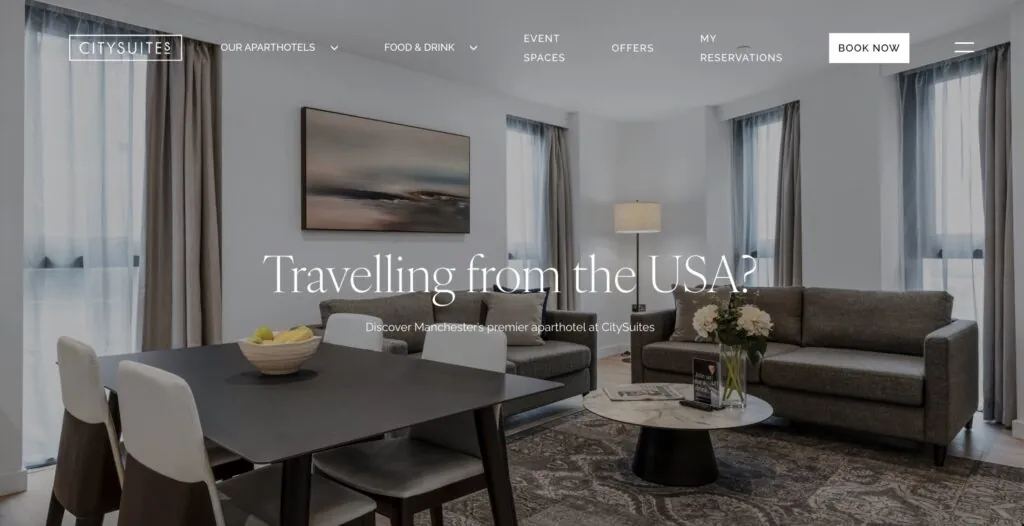
A great example of this is the CitySuites USA landing page:
This page is designed specifically to speak to an American audience, with relevant copy, images, and booking options tailored to that demographic. It’s a perfect showcase of how hotels can build audience-specific landing pages that both inform and convert.
Let’s say someone searches “luxury hotel with hot tub in Manchester.” If your hotel only has a generic homepage, you may not appear. But if you’ve got an SEO-optimised landing page titled “Luxury Hotel Suites with Hot Tubs in Manchester”, you stand a much better chance.
Targeted landing pages allow hotels to appear for long-tail, high-conversion keywords that potential guests are already searching for.
When a guest lands on a page that’s 100% relevant to what they’re looking for—whether that’s dog-friendly stays, romantic weekend breaks, or meeting room hire—they’re far more likely to stay and engage. That means:
Google takes all of this into account when ranking your site.
Each landing page is a new opportunity to bring someone in via Google. The more relevant, well-optimised pages you have, the more visible you become, without needing to rely solely on paid search or OTAs.
Create a helpful landing page like “Things to Do in [Your Location]” or “Seasonal Guide to [Your Region]” and not only do you improve SEO, but you create shareable content that can attract backlinks and drive organic traffic over time.
Getting traffic is only half the job. A well-built landing page should also convert visitors into bookers. And when that happens, you get double the benefit: more revenue and stronger SEO signals.
Here’s how:
A guest who stays on your page, reads about your spa, checks availability, and books a room is sending all the right signals to Google. These engagement metrics (dwell time, click-throughs, interactions) help improve organic rankings.
With focused landing pages, you can more accurately track what’s working—whether that’s location-based keywords, offers, or ad campaigns. This insight lets you continually refine your SEO and PPC strategies.
High-converting landing pages make it easy for users to take the next step—whether that’s viewing rooms, checking dates, or completing a booking. They also reduce bounce rates, which benefits SEO over time.
UP Hotel Agency often recommends these types of landing pages for hotel SEO:
Each one can be tailored with relevant keywords, helpful content, and a strong call to action to maximise performance in search results.
To perform well, your landing page should:
At UP Hotel Agency, we also recommend schema markup and structured data to enhance your appearance in search results (think star ratings, FAQs, availability).
Landing pages aren’t just for ticking SEO boxes — they’re a smart way to boost visibility and bookings. And yet, they’re still underused by many hotels.
If you want to show up for what makes your property unique — whether that’s your location, your spa, or your packages — landing pages are a great place to start.
Need help building pages that are built for both Google and your guests? That’s where we come in.
When it comes to boosting your visibility online, landing pages can often get overlooked. While businesses often focus on homepage design and social media, it’s actually landing pages that can make or break your SEO efforts and your conversions.
In this guide, we’ll walk you through exactly why landing pages matter for SEO, how they work, and what makes a landing page not just rank well, but convert too.
A landing page is a focused web page created to target a specific audience or goal. For hotels, that could be:
Unlike your homepage, which tries to do everything at once, landing pages guide users toward one clear call to action—typically a direct booking or enquiry.
A great example of this is the CitySuites USA landing page:
This page is designed specifically to speak to an American audience, with relevant copy, images, and booking options tailored to that demographic. It’s a perfect showcase of how hotels can build audience-specific landing pages that both inform and convert.
Let’s say someone searches “luxury hotel with hot tub in Manchester.” If your hotel only has a generic homepage, you may not appear. But if you’ve got an SEO-optimised landing page titled “Luxury Hotel Suites with Hot Tubs in Manchester”, you stand a much better chance.
Targeted landing pages allow hotels to appear for long-tail, high-conversion keywords that potential guests are already searching for.
When a guest lands on a page that’s 100% relevant to what they’re looking for—whether that’s dog-friendly stays, romantic weekend breaks, or meeting room hire—they’re far more likely to stay and engage. That means:
Google takes all of this into account when ranking your site.
Each landing page is a new opportunity to bring someone in via Google. The more relevant, well-optimised pages you have, the more visible you become, without needing to rely solely on paid search or OTAs.
Create a helpful landing page like “Things to Do in [Your Location]” or “Seasonal Guide to [Your Region]” and not only do you improve SEO, but you create shareable content that can attract backlinks and drive organic traffic over time.
Getting traffic is only half the job. A well-built landing page should also convert visitors into bookers. And when that happens, you get double the benefit: more revenue and stronger SEO signals.
Here’s how:
A guest who stays on your page, reads about your spa, checks availability, and books a room is sending all the right signals to Google. These engagement metrics (dwell time, click-throughs, interactions) help improve organic rankings.
With focused landing pages, you can more accurately track what’s working—whether that’s location-based keywords, offers, or ad campaigns. This insight lets you continually refine your SEO and PPC strategies.
High-converting landing pages make it easy for users to take the next step—whether that’s viewing rooms, checking dates, or completing a booking. They also reduce bounce rates, which benefits SEO over time.
UP Hotel Agency often recommends these types of landing pages for hotel SEO:
Each one can be tailored with relevant keywords, helpful content, and a strong call to action to maximise performance in search results.
To perform well, your landing page should:
At UP Hotel Agency, we also recommend schema markup and structured data to enhance your appearance in search results (think star ratings, FAQs, availability).
Landing pages aren’t just for ticking SEO boxes — they’re a smart way to boost visibility and bookings. And yet, they’re still underused by many hotels.
If you want to show up for what makes your property unique — whether that’s your location, your spa, or your packages — landing pages are a great place to start.
Need help building pages that are built for both Google and your guests? That’s where we come in.