/ Apr 05, 2026
Trending
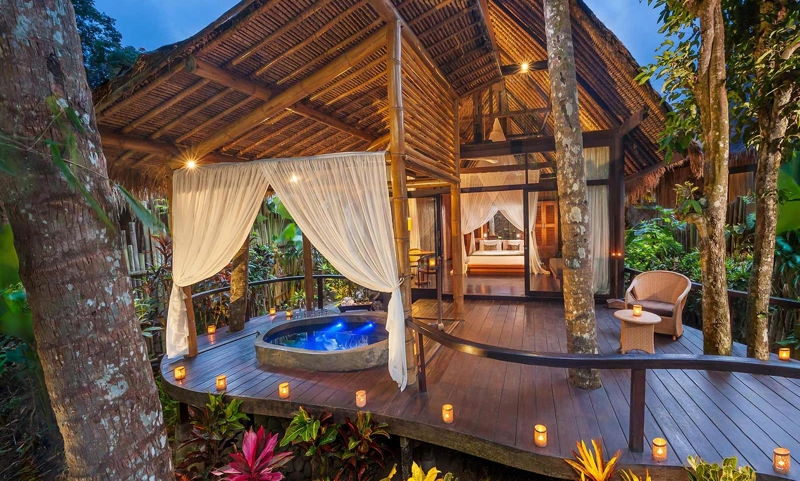

Image Credit Fivelements Retreat in Bali
The hospitality industry contributes to 3% of global carbon emissions, with hotel operations responsible for 1% and construction of new hotels accounting for the remaining 2% (UNTWO,2022). Additionally, the industry generates approximately 289,700 tons of waste annually, which include around 79,000 tons of food waste (Tostivint et al., 2016).
As concerns over environmental impact and corporate responsibility grow, hotels globally are adopting multiple “green” initiatives aimed at reducing their carbon footprint, conserving resources, and improve community engagement.
Numerous “Green” certifications have emerged over the last decade, and this can be noted as a step in the right direction for hotels that desire to add sustainability in their ethos and make commensurate efforts. Nevertheless, such certificates come at a cost and some challenges towards understanding and implementation that hamper these platforms to be widely accepted. As a matter of fact, properties can get discouraged not only with costs associated for obtaining these certificates (ranging from annual fees to various audits fee and potential construction expenses) but also with the extensive lists of measures/best practices (staff training, sustainability criteria to follow) necessary to comply with the certification requirements.
Additionally, some Owners may also question the intrinsic value of a certificate and perceive it only as a marketing tool. As a result of the wider disconnect between sustainability experts and hotel operators, majority of the brands are formulating their own unique policy and guidelines for establishing sustainability practices throughout their chain/network.
In order to understand the context, relevance and adaptation of sustainability practices in wellness resorts, we have researched two leading entities in the wellness hospitality segment, differentiated by their size, programming and target clientele. They are:
Sustainability at Six Senses – a structured corporate approach
Six Senses, a known luxury retreat brand, has been a pioneer in merging sustainability practices and discerning experiences by implementing innovative operational measures and demonstrating a strong commitment to environmental conservation. The brand’s sustainability standards have been recognized by GSTC (Global Sustainable Tourism Council) with some initiatives even extending beyond this purview. Below are some of the key best practices followed by the brand and across all resorts, extending from the development phase up to day-to-day operations.
By understanding how sustainability goals fit into the corporate as well as the operational nuances, gives the reader an in-depth perspective of how large and organised brands are approaching this topic.
Fivelements Retreat, Bali – holistic wellness and sustainability
The Fivelements Retreat Bali has been chosen as it uniquely embraces a holistic sustainability approach i.e. creating activities, experiences and offerings that drive demand from guests as well as sustainable outcomes. In most cases the guests are a key part of the sustainability offerings making them extremely unique. The operational and wellness focus of the property is rooted in the Balinese philosophy of Tri Hita Karana, which highlights three core principles: respect for God, nature, and humanity. These principles shape every aspect of the resort’s operations, emphasizing environmental and social responsibility.
With a nifty and curated approach to sustainability, the Fivelements Bali pushes the boundaries of inclusion of guests, local communities and third-party organisations to achieve sustainable outcomes. The resort further enhances these touchpoints by communicating to each guest their carbon footprint and consumption during their stay making a conscious effort towards awareness of these modern-day challenges.
Key highlights:
Our interviews with industry professionals and sustainable organizations shed light on an apparent gap within the industry when it comes to implementing and measuring best practices at a property level.


Matthieu Provino – Junior Consultant, Health & Wellness
Matthieu Provino, a Junior Consultant, has a comprehensive background in market research, competitive analysis, benchmarking and financial analysis. Connect with Matthew on LinkedIn.
This article originally appeared on Horwath HTL.
Image Credit Fivelements Retreat in Bali
The hospitality industry contributes to 3% of global carbon emissions, with hotel operations responsible for 1% and construction of new hotels accounting for the remaining 2% (UNTWO,2022). Additionally, the industry generates approximately 289,700 tons of waste annually, which include around 79,000 tons of food waste (Tostivint et al., 2016).
As concerns over environmental impact and corporate responsibility grow, hotels globally are adopting multiple “green” initiatives aimed at reducing their carbon footprint, conserving resources, and improve community engagement.
Numerous “Green” certifications have emerged over the last decade, and this can be noted as a step in the right direction for hotels that desire to add sustainability in their ethos and make commensurate efforts. Nevertheless, such certificates come at a cost and some challenges towards understanding and implementation that hamper these platforms to be widely accepted. As a matter of fact, properties can get discouraged not only with costs associated for obtaining these certificates (ranging from annual fees to various audits fee and potential construction expenses) but also with the extensive lists of measures/best practices (staff training, sustainability criteria to follow) necessary to comply with the certification requirements.
Additionally, some Owners may also question the intrinsic value of a certificate and perceive it only as a marketing tool. As a result of the wider disconnect between sustainability experts and hotel operators, majority of the brands are formulating their own unique policy and guidelines for establishing sustainability practices throughout their chain/network.
In order to understand the context, relevance and adaptation of sustainability practices in wellness resorts, we have researched two leading entities in the wellness hospitality segment, differentiated by their size, programming and target clientele. They are:
Sustainability at Six Senses – a structured corporate approach
Six Senses, a known luxury retreat brand, has been a pioneer in merging sustainability practices and discerning experiences by implementing innovative operational measures and demonstrating a strong commitment to environmental conservation. The brand’s sustainability standards have been recognized by GSTC (Global Sustainable Tourism Council) with some initiatives even extending beyond this purview. Below are some of the key best practices followed by the brand and across all resorts, extending from the development phase up to day-to-day operations.
By understanding how sustainability goals fit into the corporate as well as the operational nuances, gives the reader an in-depth perspective of how large and organised brands are approaching this topic.
Fivelements Retreat, Bali – holistic wellness and sustainability
The Fivelements Retreat Bali has been chosen as it uniquely embraces a holistic sustainability approach i.e. creating activities, experiences and offerings that drive demand from guests as well as sustainable outcomes. In most cases the guests are a key part of the sustainability offerings making them extremely unique. The operational and wellness focus of the property is rooted in the Balinese philosophy of Tri Hita Karana, which highlights three core principles: respect for God, nature, and humanity. These principles shape every aspect of the resort’s operations, emphasizing environmental and social responsibility.
With a nifty and curated approach to sustainability, the Fivelements Bali pushes the boundaries of inclusion of guests, local communities and third-party organisations to achieve sustainable outcomes. The resort further enhances these touchpoints by communicating to each guest their carbon footprint and consumption during their stay making a conscious effort towards awareness of these modern-day challenges.
Key highlights:
Our interviews with industry professionals and sustainable organizations shed light on an apparent gap within the industry when it comes to implementing and measuring best practices at a property level.
Matthieu Provino – Junior Consultant, Health & Wellness
Matthieu Provino, a Junior Consultant, has a comprehensive background in market research, competitive analysis, benchmarking and financial analysis. Connect with Matthew on LinkedIn.
This article originally appeared on Horwath HTL.