/ May 07, 2026
Trending
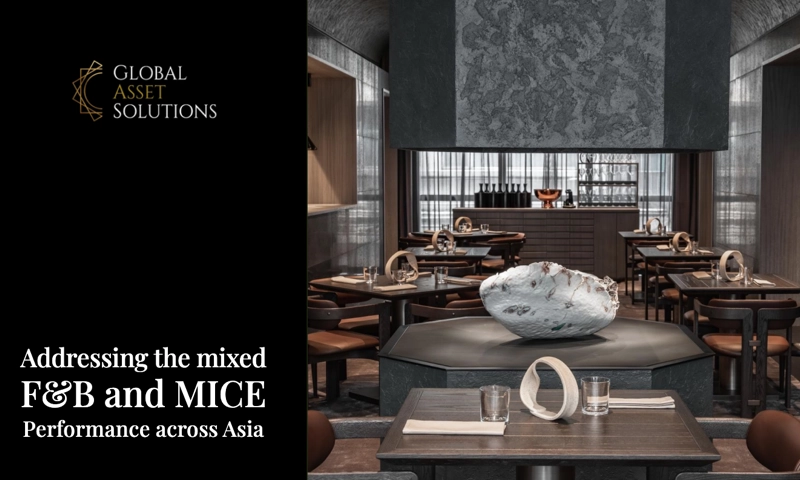

Asian Hotels Navigate Uneven Post-Pandemic Recovery: F&B and MICE Sectors in Focus – Image Credit Global Asset Solutions
While some regions like Southeast Asia have seen a robust rebound, others, including Hong Kong, Japan, and Mainland China, continue to face challenges. Global Asset Solutions explores the factors influencing these trends, including cost pressures, market reopening strategies, and evolving consumer preferences.
The post-pandemic landscape for Asia’s hotel industry, specifically in the F&B and MICE sectors, presents a complex picture. While some areas have rebounded strongly, others continue to struggle with recovery. This uneven performance is influenced by various factors, including increased cost pressures and different approaches to reopening markets for international travel.
Regional Variations in Recovery
Significant regional variations have marked the recovery of hotel F&B and MICE sectors in Asia. Southeast Asian countries like Vietnam, Thailand, and Indonesia have experienced high profit margins in the F&B sector, surpassing pre-pandemic levels. In contrast, markets such as Hong Kong, Japan, and Mainland China have not yet reached their pre-pandemic benchmarks.
Cost Pressures and Market Dynamics
Cost pressures, including labor cost inflation and rising input prices, have posed significant challenges for the hotel industry. The CreditorWatch April 2024 Business Risk Index highlights the fragility of hospitality businesses, with a high probability of collapse due to increased B2B payment defaults. Despite these challenges, some markets have managed to absorb cost pressures and avoid collapse, signaling cautious optimism for investors.
Hong Kong’s Path to Recovery
Hong Kong’s recovery has been steady but not spectacular. After prolonged pandemic restrictions, the city reopened its borders in early 2023. While tourism has rebounded, the F&B sector has plateaued, with total restaurant receipts remaining flat year-on-year. Despite these challenges, Hong Kong continues to attract MICE visitors, contributing significantly to the local economy.
Mainland China’s Structural Shift
In Mainland China, a new trend has emerged with five-star hotels setting up street food stalls as a response to structural pressures on hotel food and beverage operations. Average F&B revenue at upscale hotels has dropped significantly, influenced by policy changes promoting austerity. This has led to a decline in luxury hotel properties and a shift towards more accessible dining options.
Japan’s Recovery and Future Prospects
Japan’s travel industry has shown signs of recovery, with visitor numbers expected to increase in the coming years. The Japanese Tourist Board predicts a significant rise in visitors by 2025, with the country on track to meet its long-term tourism goals. Hotel performance in Tokyo is expected to approach pre-pandemic levels, driven by balanced new hotel supply.
Singapore’s Positive Trajectory
Singapore has demonstrated steady improvements in F&B profit margins, making it an attractive market for investors. The city-state has launched a global marketing campaign to position itself as the “World’s Best MICE City,” aiming to maintain a competitive edge in the region. The wider hotel industry in Singapore has shown a strong recovery, supported by government initiatives and international demand.
Strategies for Margin Control
To protect and rebuild profit margins, hotel F&B leaders in Asia have implemented various strategies. These include streamlining menus and operations, sourcing locally to reduce import costs, negotiating supply agreements, and cross-training staff to handle multiple roles. Waste reduction programs have also been introduced to bolster margins by cutting food waste.
Adapting to Changing Consumer Preferences
Consumer tastes have evolved, with a focus on value and digital engagement. Hotels have adapted their F&B concepts to align with these preferences, repositioning underperforming outlets and embracing digital menus and contactless dining. Partnerships with local restaurants and offering delivery and takeaway options have also helped hotels capture new revenue streams.
Leveraging Technology for Profitability
Technology has become a key ally for hotels aiming to boost F&B and MICE profitability. Data-driven decision-making, automation, and inventory management systems have been deployed to optimize operations and enhance guest experiences. These technological solutions help hotels improve their bottom line through efficiency and incremental revenue.
Read the complete Global Asset Solutions report.
Asian Hotels Navigate Uneven Post-Pandemic Recovery: F&B and MICE Sectors in Focus – Image Credit Global Asset Solutions
While some regions like Southeast Asia have seen a robust rebound, others, including Hong Kong, Japan, and Mainland China, continue to face challenges. Global Asset Solutions explores the factors influencing these trends, including cost pressures, market reopening strategies, and evolving consumer preferences.
The post-pandemic landscape for Asia’s hotel industry, specifically in the F&B and MICE sectors, presents a complex picture. While some areas have rebounded strongly, others continue to struggle with recovery. This uneven performance is influenced by various factors, including increased cost pressures and different approaches to reopening markets for international travel.
Regional Variations in Recovery
Significant regional variations have marked the recovery of hotel F&B and MICE sectors in Asia. Southeast Asian countries like Vietnam, Thailand, and Indonesia have experienced high profit margins in the F&B sector, surpassing pre-pandemic levels. In contrast, markets such as Hong Kong, Japan, and Mainland China have not yet reached their pre-pandemic benchmarks.
Cost Pressures and Market Dynamics
Cost pressures, including labor cost inflation and rising input prices, have posed significant challenges for the hotel industry. The CreditorWatch April 2024 Business Risk Index highlights the fragility of hospitality businesses, with a high probability of collapse due to increased B2B payment defaults. Despite these challenges, some markets have managed to absorb cost pressures and avoid collapse, signaling cautious optimism for investors.
Hong Kong’s Path to Recovery
Hong Kong’s recovery has been steady but not spectacular. After prolonged pandemic restrictions, the city reopened its borders in early 2023. While tourism has rebounded, the F&B sector has plateaued, with total restaurant receipts remaining flat year-on-year. Despite these challenges, Hong Kong continues to attract MICE visitors, contributing significantly to the local economy.
Mainland China’s Structural Shift
In Mainland China, a new trend has emerged with five-star hotels setting up street food stalls as a response to structural pressures on hotel food and beverage operations. Average F&B revenue at upscale hotels has dropped significantly, influenced by policy changes promoting austerity. This has led to a decline in luxury hotel properties and a shift towards more accessible dining options.
Japan’s Recovery and Future Prospects
Japan’s travel industry has shown signs of recovery, with visitor numbers expected to increase in the coming years. The Japanese Tourist Board predicts a significant rise in visitors by 2025, with the country on track to meet its long-term tourism goals. Hotel performance in Tokyo is expected to approach pre-pandemic levels, driven by balanced new hotel supply.
Singapore’s Positive Trajectory
Singapore has demonstrated steady improvements in F&B profit margins, making it an attractive market for investors. The city-state has launched a global marketing campaign to position itself as the “World’s Best MICE City,” aiming to maintain a competitive edge in the region. The wider hotel industry in Singapore has shown a strong recovery, supported by government initiatives and international demand.
Strategies for Margin Control
To protect and rebuild profit margins, hotel F&B leaders in Asia have implemented various strategies. These include streamlining menus and operations, sourcing locally to reduce import costs, negotiating supply agreements, and cross-training staff to handle multiple roles. Waste reduction programs have also been introduced to bolster margins by cutting food waste.
Adapting to Changing Consumer Preferences
Consumer tastes have evolved, with a focus on value and digital engagement. Hotels have adapted their F&B concepts to align with these preferences, repositioning underperforming outlets and embracing digital menus and contactless dining. Partnerships with local restaurants and offering delivery and takeaway options have also helped hotels capture new revenue streams.
Leveraging Technology for Profitability
Technology has become a key ally for hotels aiming to boost F&B and MICE profitability. Data-driven decision-making, automation, and inventory management systems have been deployed to optimize operations and enhance guest experiences. These technological solutions help hotels improve their bottom line through efficiency and incremental revenue.
Read the complete Global Asset Solutions report.