/ May 04, 2026
Trending
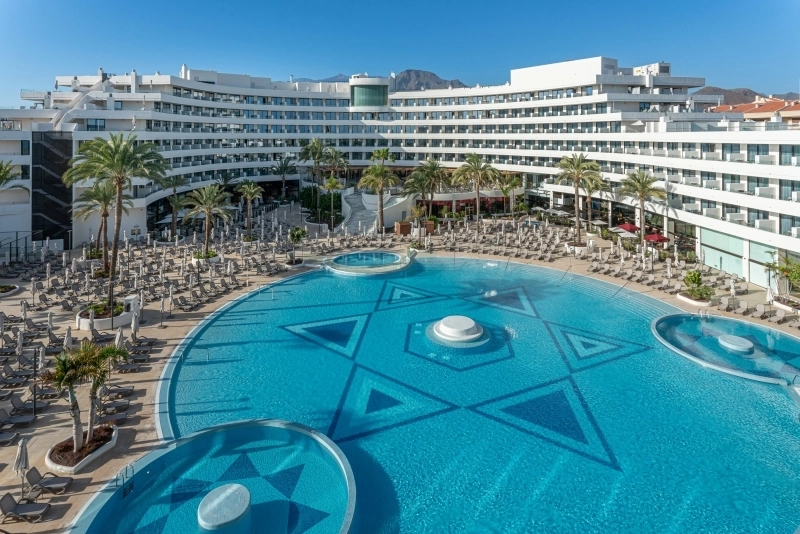

The 1,037-room Mare Nostrum Resort in Tenerife was acquired for €430 million by Spring Hotel Group from Brookfield AM. – Image Credit Mediterranean Palace Hotel
HVS discusses the main hotel transactions that took place in the first half of 2025 and looks at the trends in single-asset and portfolio transactions over the years.
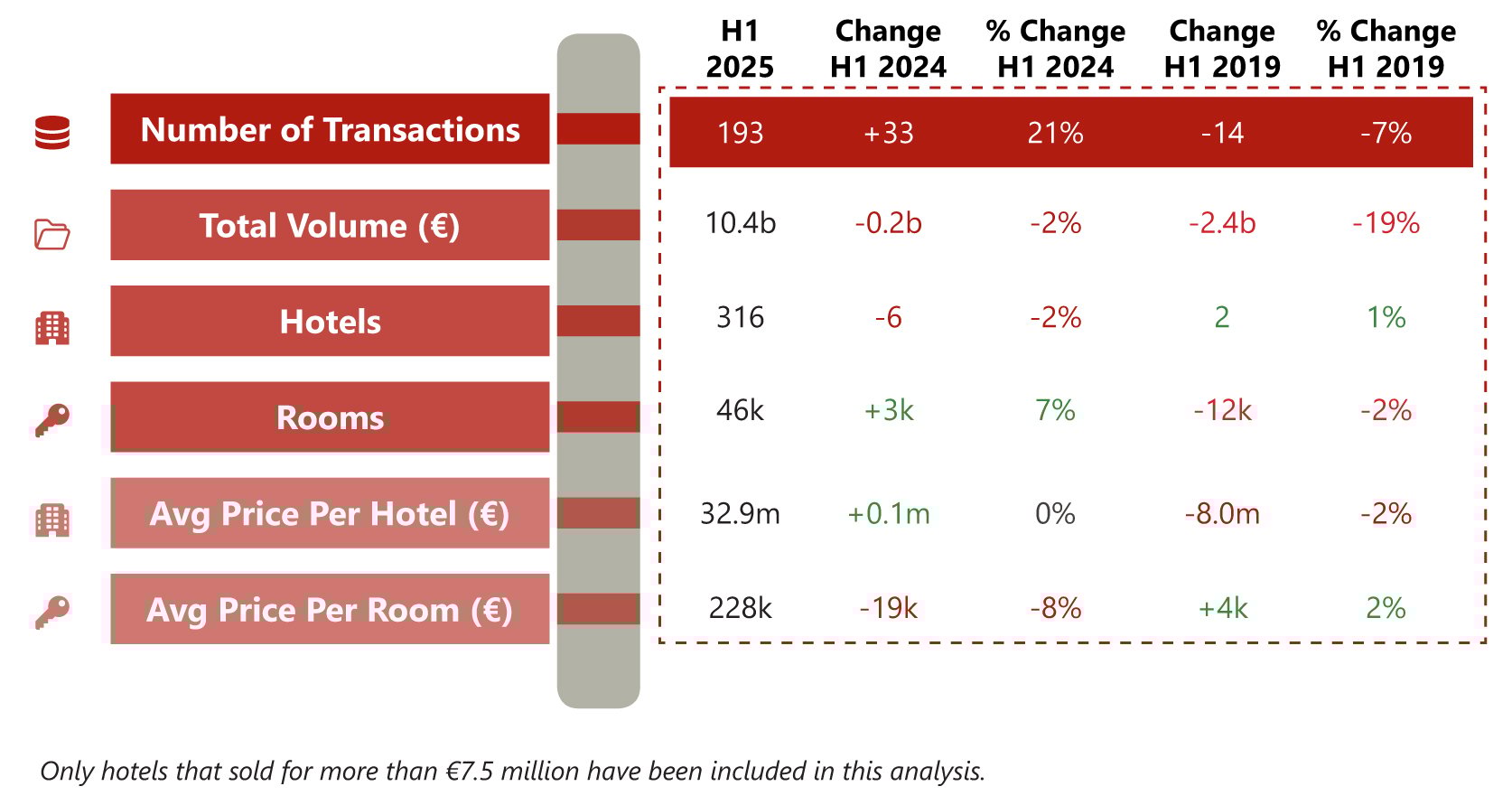
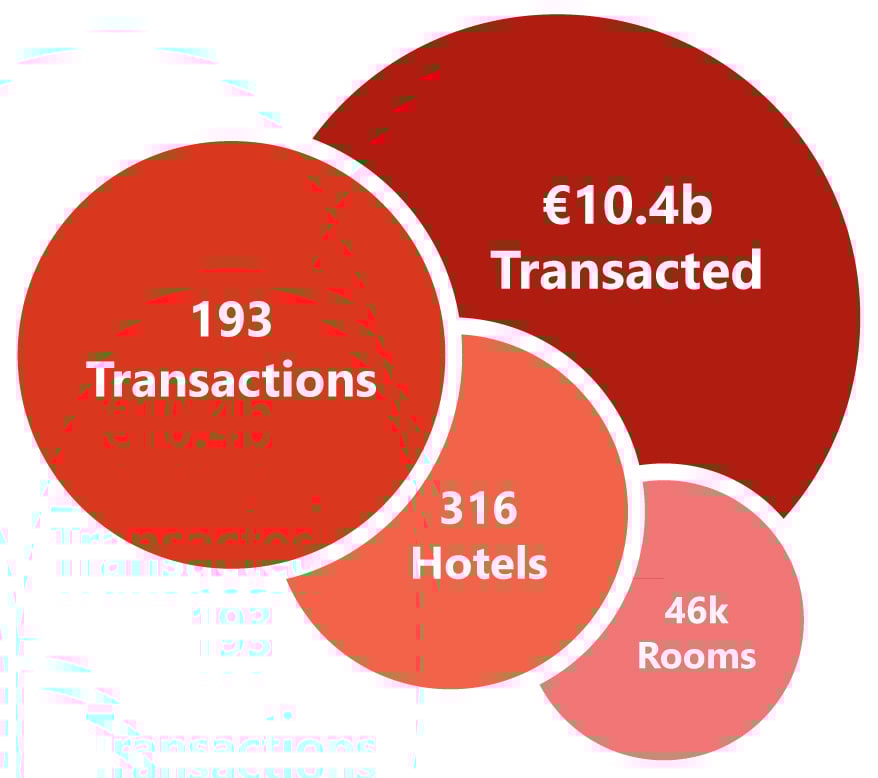
Transaction activity remained high in the first half of 2025, marginally shy of the 2024 levels over the same period but, at €10.4 billion, above the average for the last decade. Single-asset deals were at the forefront of the investment landscape in H1 2025, with the total number of transactions increasing by 21% year-on-year. An increase of 9% in the average number of rooms per hotel transacted has led to a decrease in the average price per room of 8% compared to H1 2024.
 |  |
Source: HVS – London Office
General Commentary
Chart 1: H1 2025 Transaction Volumes Well Above Ten-Year H1 Average 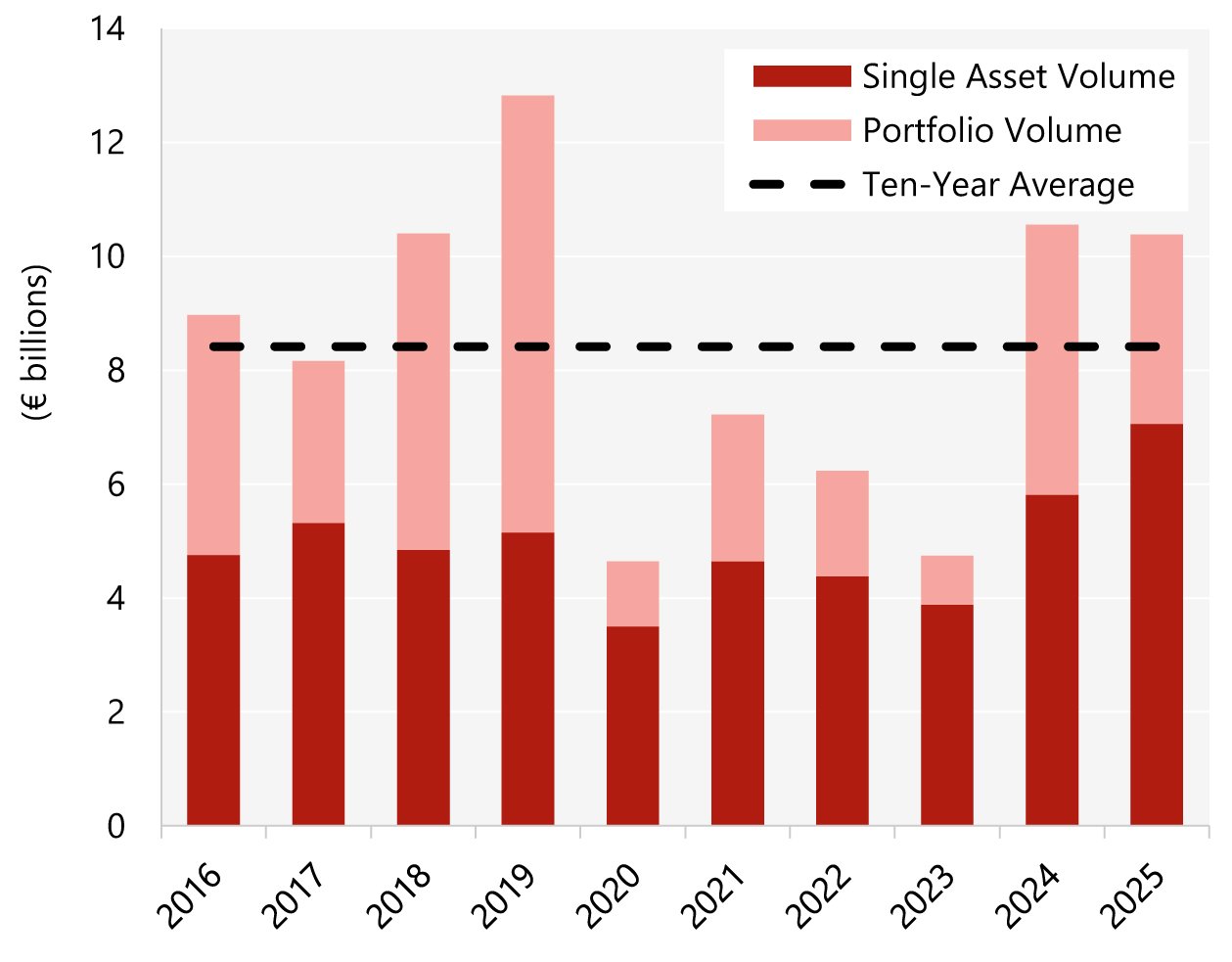
Source: HVS – London Office
Chart 2: H1 2025 Transaction Volumes Maintain
The Pace Set in 2024 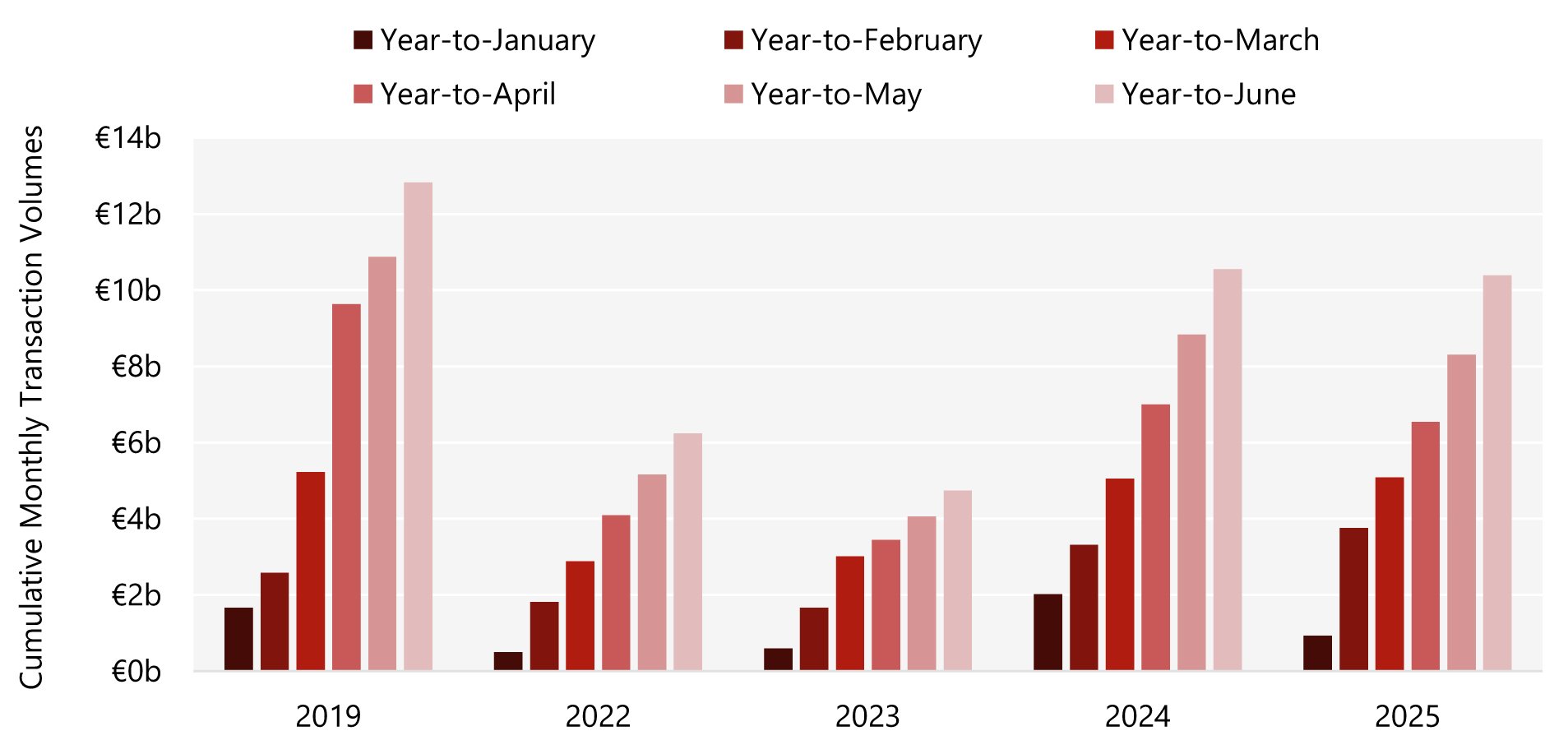
Source: HVS – London Office
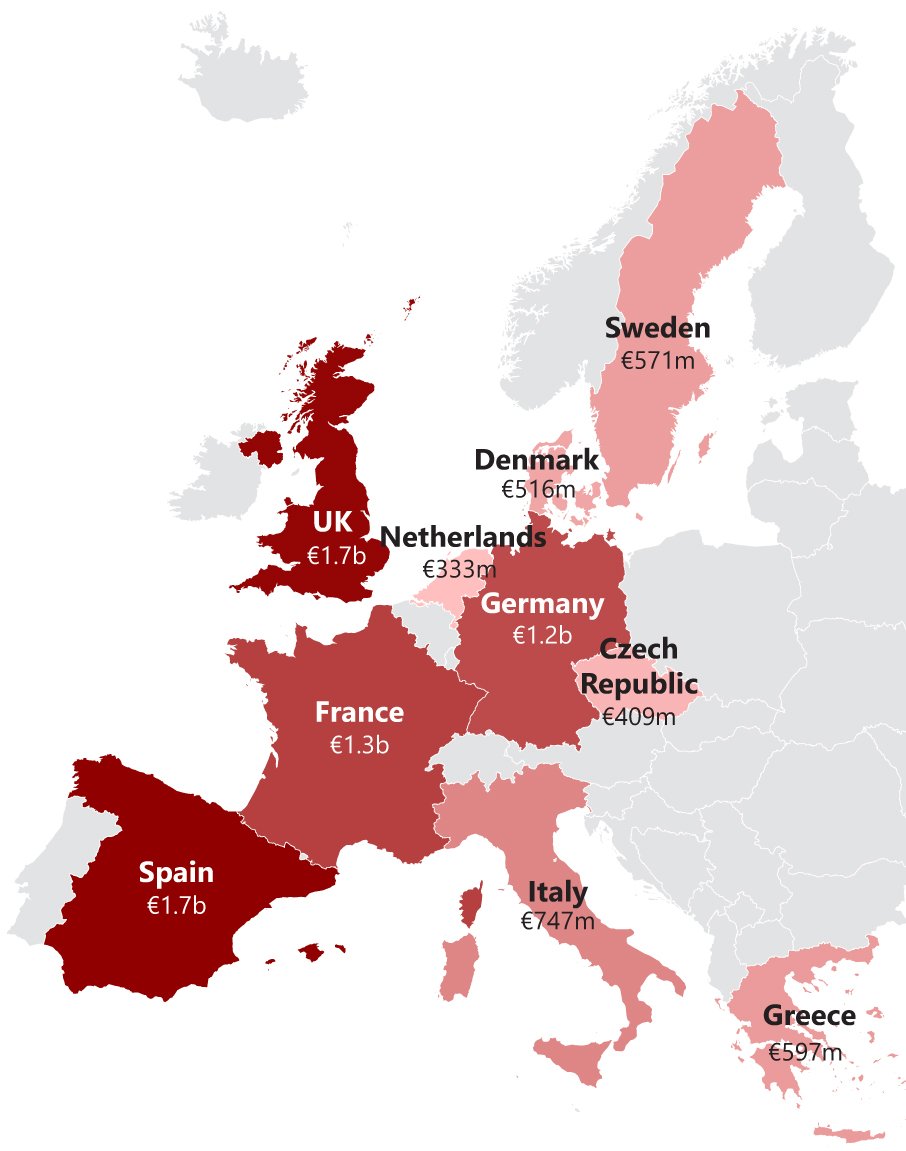
Chart 3: Spain and the UK Vie for the Largest Transaction Volume in H1 2025 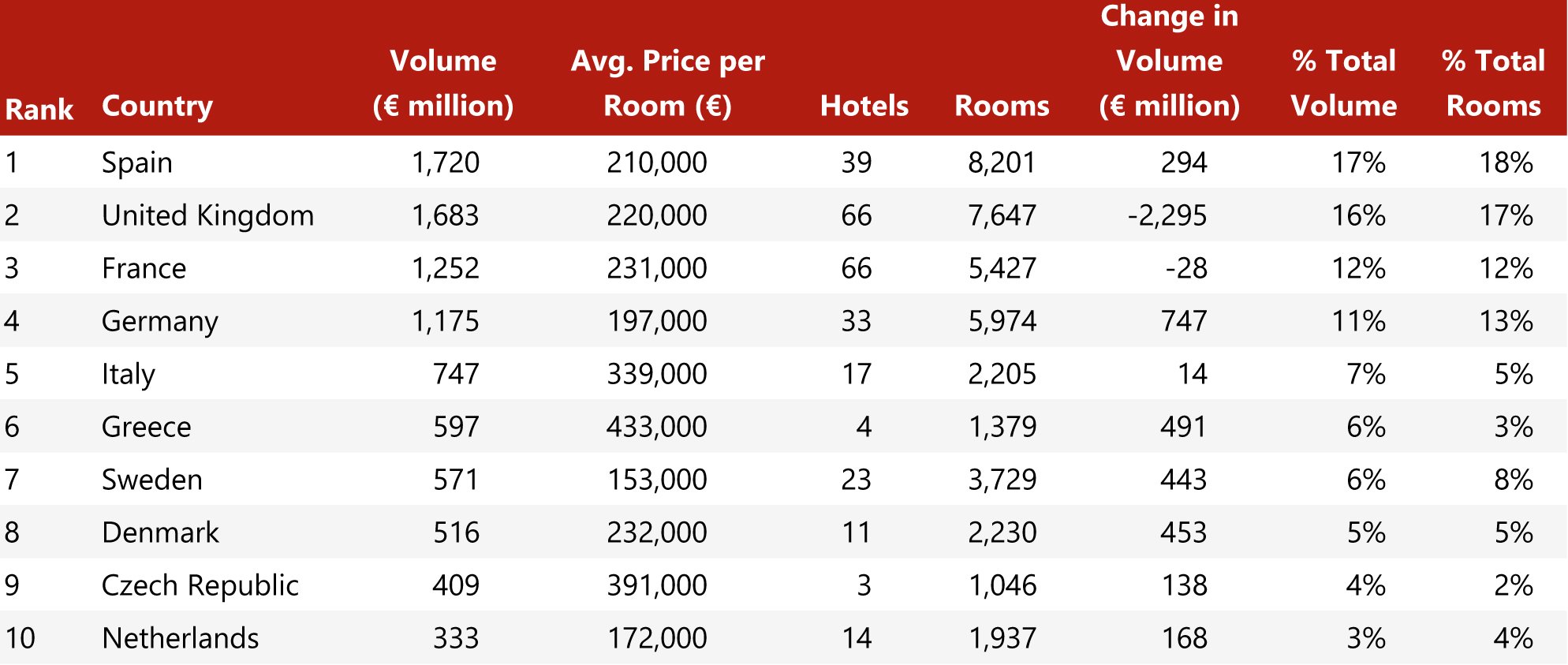
Source: HVS – London Office
 The Rise of HNWI Investors
Global markets have experienced a notable degree of volatility since the start of 2025, principally related to the policies of the current US administration. The lack of clarity as to the intent, implementation and duration of those policies created widespread uncertainty, resulting in significant fluctuations in markets throughout the world. This volatility has been further compounded by ongoing geopolitical uncertainties, which continue to weigh on investor sentiment. Despite this uncertainty, which includes a potential if not yet evidenced decrease in inbound tourism from the US, single-asset transactions established a new record in H1 2025, reaching €7.1 billion, 12% higher than 2019 levels in real terms.
Chart 4: HNWIs become the highest net buyer amongst all investors, acquiring nearly €1 billion more than they disposed of (€ millions) 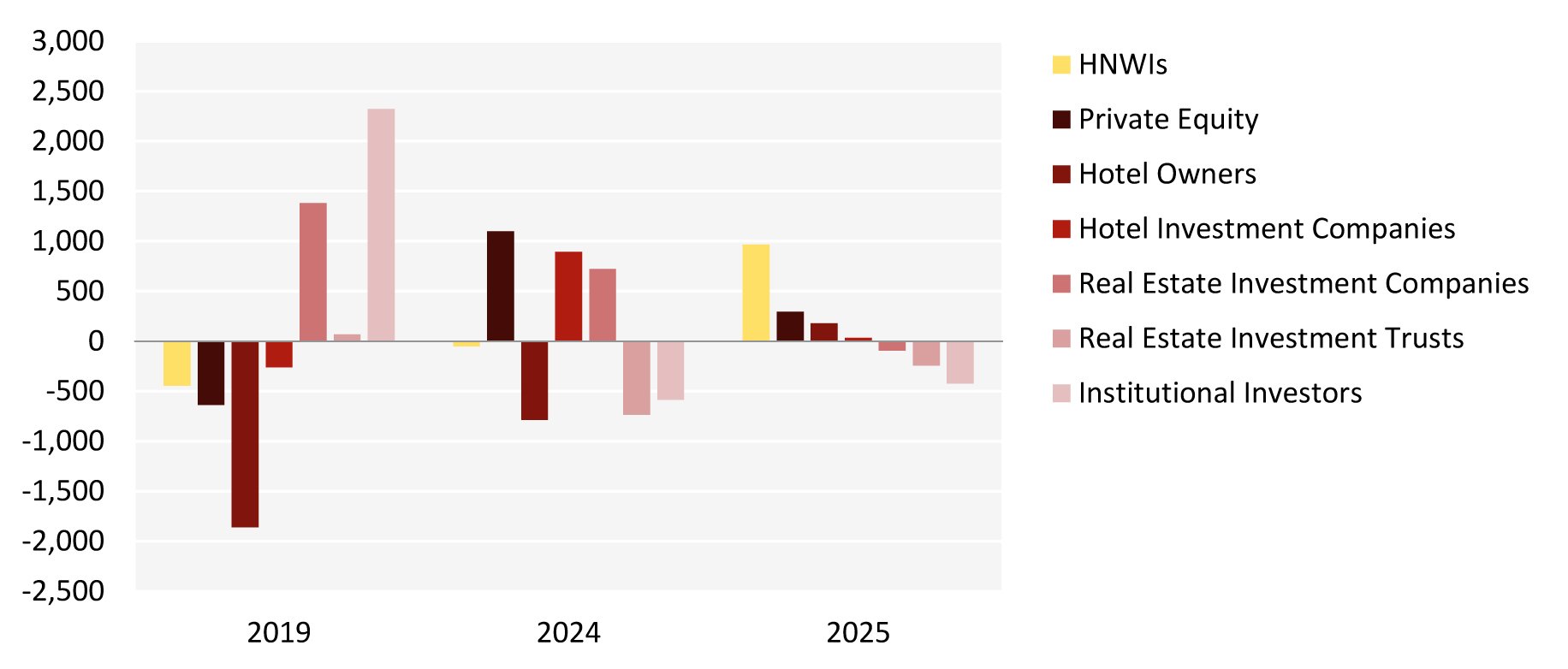
Source: HVS – London Office
One of the driving factors behind the push in single-asset transactions is the rise of hotels as an investment asset class for high-net-worth individuals. HNWI capital is increasingly being deployed in alternative assets and private markets, as investors seek greater expected returns, and the resilience of hotels post-pandemic has placed them solidly in their list. In a matter of six years, HNWI went from being the third smallest net buyer among the other investor classes, to being the largest net buyer in H1 2025.
Echoing the increased appetite for investment in luxury hotels noticed in the past year, as outlined in our H1 2024 European Hotel Transactions report, high-net-worth individuals primarily invested their capital in upscale and upper-upscale hotels this semester, leading all other investor classes in average price per room on acquisitions (€581,000 versus an average of €228,000).
Notable HNWI acquisitions this semester included the 20% stake acquisition of Firmdale Hotels by Swedish pharmaceutical entrepreneur Lennart Perlhagen for a reported £300 million (€364 million), the acquisition of the remaining 67% shares in the Four Seasons Astir Palace Hotel Athens by George Procopiou (a few months after having acquired the initial 33% shares), and the acquisition of the five-star Alpina Gstaad in Switzerland by an undisclosed US investor for a reported SFr200 million (€210 million).
Outlook
Hotels have long been perceived as a highly specialist investment market, where both time and industry knowledge were necessary in order to reach a certain level of returns, often discouraging HNWIs from entering the market. Nonetheless, the industry’s strong potential for inflation-hedging, diversification and real estate appreciation, as well as the increasing sophistication of the industry, where dedicated professional operations and asset management capabilities are present, increasingly convince affluent investors to consider hotels in parallel to other types of direct property investments.
In 2024, Europe recorded close to 750 million tourist arrivals, marking a 1% increase over 2019 and 5% growth compared to 2023, according to UN Tourism, capturing 58% of total visitors worldwide. Every subregion exceeded pre-pandemic levels, with the exception of Central and Eastern Europe, which continues to be affected by the Russo-Ukrainian conflict. Despite an uncertain start to the year marked by the implementation of trade tariffs and potential repercussions on US outbound tourism, stability has improved since 2 April (President Trump’s ‘Liberation Day’ when he introduced sweeping tariffs on foreign imports), further encouraging high-net-worth investors to deploy their capital in the industry.
About Maxime Gauthier
Maxime Gauthier joined the HVS London office as a consulting and valuation analyst in January 2024. Fluent in English and French, he holds a BSc (Hons) from EHL Hospitality Business School and an MSc in Finance from NOVA School of Business and Economics in Lisbon. Prior to joining HVS, Maxime gained experience in finance with Marriott in Singapore and with a brokerage firm in France. His primary responsibilities at HVS include valuations of single assets and hotel portfolios, feasibility studies and market research within the EMEA region. For more information, contact mgauthier@hvs.com.
About Sophie Perret
Sophie Perret is managing director of the HVS London office. She joined HVS in 2003, following ten years’ operational experience in the hospitality industry in South America and Europe. Originally from Buenos Aires, Argentina, Sophie holds a degree in Hotel Management from Ateneo de Estudios Terciarios, and an MBA from IMHI (Essec Business School, France and Cornell University, USA). Since joining HVS, she has advised on hotel investment projects and related assignments throughout the EMEA region, and is responsible for the development of HVS’s business in France and the French-speaking countries. Sophie completed an MSc in Real Estate Investment and Finance at Reading University in 2014. Sophie is also a certified surveyor and a member of the RICS. For further information, please contact: sperret@hvs.com or +44 20 7878-7722 (Work)
The 1,037-room Mare Nostrum Resort in Tenerife was acquired for €430 million by Spring Hotel Group from Brookfield AM. – Image Credit Mediterranean Palace Hotel
HVS discusses the main hotel transactions that took place in the first half of 2025 and looks at the trends in single-asset and portfolio transactions over the years.
Transaction activity remained high in the first half of 2025, marginally shy of the 2024 levels over the same period but, at €10.4 billion, above the average for the last decade. Single-asset deals were at the forefront of the investment landscape in H1 2025, with the total number of transactions increasing by 21% year-on-year. An increase of 9% in the average number of rooms per hotel transacted has led to a decrease in the average price per room of 8% compared to H1 2024.
| |
Source: HVS – London Office
General Commentary
Chart 1: H1 2025 Transaction Volumes Well Above Ten-Year H1 Average
Source: HVS – London Office
Chart 2: H1 2025 Transaction Volumes Maintain
The Pace Set in 2024
Source: HVS – London Office
Chart 3: Spain and the UK Vie for the Largest Transaction Volume in H1 2025
Source: HVS – London Office
The Rise of HNWI Investors
Global markets have experienced a notable degree of volatility since the start of 2025, principally related to the policies of the current US administration. The lack of clarity as to the intent, implementation and duration of those policies created widespread uncertainty, resulting in significant fluctuations in markets throughout the world. This volatility has been further compounded by ongoing geopolitical uncertainties, which continue to weigh on investor sentiment. Despite this uncertainty, which includes a potential if not yet evidenced decrease in inbound tourism from the US, single-asset transactions established a new record in H1 2025, reaching €7.1 billion, 12% higher than 2019 levels in real terms.
Chart 4: HNWIs become the highest net buyer amongst all investors, acquiring nearly €1 billion more than they disposed of (€ millions)
Source: HVS – London Office
One of the driving factors behind the push in single-asset transactions is the rise of hotels as an investment asset class for high-net-worth individuals. HNWI capital is increasingly being deployed in alternative assets and private markets, as investors seek greater expected returns, and the resilience of hotels post-pandemic has placed them solidly in their list. In a matter of six years, HNWI went from being the third smallest net buyer among the other investor classes, to being the largest net buyer in H1 2025.
Echoing the increased appetite for investment in luxury hotels noticed in the past year, as outlined in our H1 2024 European Hotel Transactions report, high-net-worth individuals primarily invested their capital in upscale and upper-upscale hotels this semester, leading all other investor classes in average price per room on acquisitions (€581,000 versus an average of €228,000).
Notable HNWI acquisitions this semester included the 20% stake acquisition of Firmdale Hotels by Swedish pharmaceutical entrepreneur Lennart Perlhagen for a reported £300 million (€364 million), the acquisition of the remaining 67% shares in the Four Seasons Astir Palace Hotel Athens by George Procopiou (a few months after having acquired the initial 33% shares), and the acquisition of the five-star Alpina Gstaad in Switzerland by an undisclosed US investor for a reported SFr200 million (€210 million).
Outlook
Hotels have long been perceived as a highly specialist investment market, where both time and industry knowledge were necessary in order to reach a certain level of returns, often discouraging HNWIs from entering the market. Nonetheless, the industry’s strong potential for inflation-hedging, diversification and real estate appreciation, as well as the increasing sophistication of the industry, where dedicated professional operations and asset management capabilities are present, increasingly convince affluent investors to consider hotels in parallel to other types of direct property investments.
In 2024, Europe recorded close to 750 million tourist arrivals, marking a 1% increase over 2019 and 5% growth compared to 2023, according to UN Tourism, capturing 58% of total visitors worldwide. Every subregion exceeded pre-pandemic levels, with the exception of Central and Eastern Europe, which continues to be affected by the Russo-Ukrainian conflict. Despite an uncertain start to the year marked by the implementation of trade tariffs and potential repercussions on US outbound tourism, stability has improved since 2 April (President Trump’s ‘Liberation Day’ when he introduced sweeping tariffs on foreign imports), further encouraging high-net-worth investors to deploy their capital in the industry.
About Maxime Gauthier
Maxime Gauthier joined the HVS London office as a consulting and valuation analyst in January 2024. Fluent in English and French, he holds a BSc (Hons) from EHL Hospitality Business School and an MSc in Finance from NOVA School of Business and Economics in Lisbon. Prior to joining HVS, Maxime gained experience in finance with Marriott in Singapore and with a brokerage firm in France. His primary responsibilities at HVS include valuations of single assets and hotel portfolios, feasibility studies and market research within the EMEA region. For more information, contact mgauthier@hvs.com.
About Sophie Perret
Sophie Perret is managing director of the HVS London office. She joined HVS in 2003, following ten years’ operational experience in the hospitality industry in South America and Europe. Originally from Buenos Aires, Argentina, Sophie holds a degree in Hotel Management from Ateneo de Estudios Terciarios, and an MBA from IMHI (Essec Business School, France and Cornell University, USA). Since joining HVS, she has advised on hotel investment projects and related assignments throughout the EMEA region, and is responsible for the development of HVS’s business in France and the French-speaking countries. Sophie completed an MSc in Real Estate Investment and Finance at Reading University in 2014. Sophie is also a certified surveyor and a member of the RICS. For further information, please contact: sperret@hvs.com or +44 20 7878-7722 (Work)