/ May 04, 2026
Trending
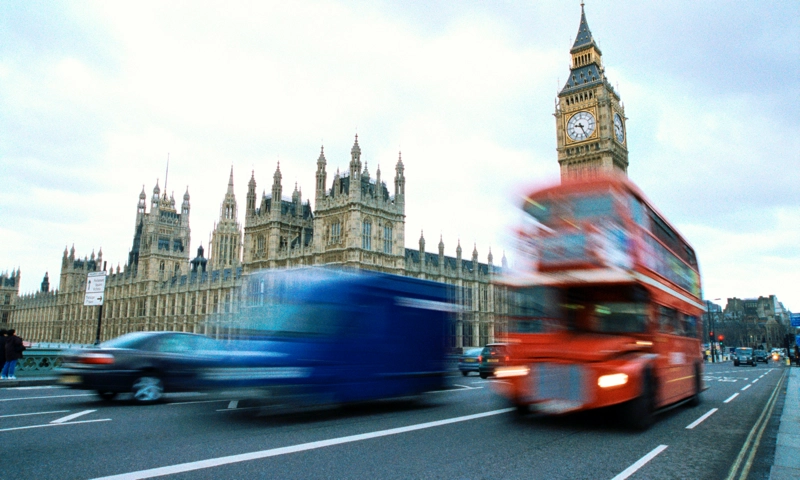

A long-time powerhouse market, London combined unbeatable location with high service scores. Its dual appeal to both leisure and business travel gave it a resilient, high-performing profile. – Image Credit Unsplash+
Summer vacations of 2025 are officially behind us—and what a season it was. Across Europe, hotels faced a market in transition: new guest behaviors, shifting demand patterns, and sharper expectations around value and service. This season’s lessons are clear: the rules of guest satisfaction continue to evolve and fluctuate, and those who adapt fastest are best positioned for steady growth.
Our new Summer 2025 Hotel Guest Experience Snapshot captures these shifts with data-driven insights from May through August 2025. In this article, we’ll look back at the highlights of the season, the key learnings for European hoteliers, and how you can use these insights to plan ahead for a successful 2026.
The 2025 Market Landscape: Guests Got More Discerning
The defining theme of the summer this year was recalibration. As the market leaves the “revenge travel” splurge trend behind, this summer, travelers approached their trips with sharper eyes and higher standards.
In fact, guests were more value-conscious than ever. While they didn’t hesitate to spend on memorable experiences, they expected core hotel fundamentals to work flawlessly, including speedy WiFi, air conditioning and cleanliness. When they didn’t, dissatisfaction spiked (and made itself quite visible through reviews), with Price emerging as the top driver of negative reviews across Europe.
For hoteliers, this means the basics are back in the spotlight. Location and Service continue to drive positive experiences, but any cracks in operations—whether in maintenance, technical infrastructure, slow responses, or consistency—carry heavier consequences.
The “Coolcation” Effect: Northward Demand Shift
One of the clearest market forces shaping 2025 was the northward pull of travelers escaping record heat in Southern Europe. What started as a trend has now reshaped demand, fueling significant growth in Northern European destinations like London, Berlin, Dublin, Edinburgh, Helsinki, Oslo, and Stockholm.

Here’s how those cities performed compared to 2024:
However, these cities didn’t just benefit due to being cooler. As a matter of fact, one cooler-climate city did see a drop in demand—Copenhagen. With a 0.49% dip in performance and a substantial drop in review volume (-13.4%), it serves as a reminder that the “coolcation” opportunity is advantageous only to hotels that deliver flawless operational excellence.
On the other hand, the cities that rose fastest were those that paired climate-driven demand with operational strengths in service, breakfast and guest engagement.
The Return of Long-Haul Travel
Another defining force of 2025 was the rebound of long-haul markets. Travelers from the U.S. and China returned to Europe in force, with U.S. inbound projected to grow by 10% and 72% of surveyed Chinese travelers planning European trips.
This wave gave a strong lift to hubs like London and Rome, which benefitted from their global brand power and connectivity. Rome, in particular, led all cities in year-over-year satisfaction growth (+2.67%), proving that iconic destinations can thrive even amid shifting expectations.
The New Value Equation
If recent years were about “revenge travel” post-COVID, 2025 was all about value travel. Guests approached their trips with more intentionality, demanding both unique experiences and flawless delivery of essentials.
In other words, guests expect the WiFi to work as seamlessly as the service is delivered. And, if it doesn’t, they’ll question whether they got what they paid for. For hotel brands, this reinforces the importance of investing in the basics, not just the “wow” factors.
The Perfect Storm of Change
As seen above, this season crystallized a convergence of forces that are redefining hospitality. Taken together, three forces reshaped the guest experience landscape:
These forces created an environment where guest satisfaction became more volatile but also more influential; showing that success in hospitality is no longer about excelling in just one area. It’s about orchestrating multiple moving parts, from climate realities, international flows to heightened guest expectations—into a seamless, resilient guest experience.
Preparing for 2026: Success Is in the Details
Hotels that anticipated these shifts and adapted proactively saw performance gains. Meanwhile, those that lagged behind (whether through weak engagement, ignored feedback, or underinvestment in core infrastructure) missed opportunities.
If Summer 2025 proved anything, it’s that hotels need to keep pace with guest expectations. Climate-driven demand shifts, the return of long-haul travelers, and rising value-consciousness are not one-off anomalies. They’re actually shaping a new baseline for hospitality across Europe.
The hotels that thrived this summer weren’t necessarily the flashiest or the trendiest. They were the ones that:
The main takeaway here is that success in 2026 won’t come from chasing every trend. Instead, it will come from anticipating change, executing the fundamentals flawlessly, and using guest feedback as a guide to smarter investment.
That’s just the high-level view of what we uncovered this summer. Our interactive Summer 2025 Hotel Guest Experience Snapshot dives much deeper, with city-by-city performance analysis, year-over-year comparisons, and actionable strategies hoteliers can use to get ahead of the next season.
Read the Summer 2025 Hotel Guest Experience Snapshot here.
About TrustYou
TrustYou is the #1 Hospitality AI platform. Since 2008, the company has supported hotels and hotel groups worldwide in turning guest feedback, customer data, and automated interactions into measurable results. The platform unifies three core products in one system:
At the core of TrustYouʼs platform are three powerful solutions:
With TrustYou, hotels invest in a future-ready platform that makes the Always-Reply Future a reality: better guest experiences, more direct revenue, and more efficient operations. For more information please visit www.trustyou.com.
Contact:
TrustYou
Alisa Kellermann
alisa.kellermann@trustyou.net
www.trustyou.com
A long-time powerhouse market, London combined unbeatable location with high service scores. Its dual appeal to both leisure and business travel gave it a resilient, high-performing profile. – Image Credit Unsplash+
Summer vacations of 2025 are officially behind us—and what a season it was. Across Europe, hotels faced a market in transition: new guest behaviors, shifting demand patterns, and sharper expectations around value and service. This season’s lessons are clear: the rules of guest satisfaction continue to evolve and fluctuate, and those who adapt fastest are best positioned for steady growth.
Our new Summer 2025 Hotel Guest Experience Snapshot captures these shifts with data-driven insights from May through August 2025. In this article, we’ll look back at the highlights of the season, the key learnings for European hoteliers, and how you can use these insights to plan ahead for a successful 2026.
The 2025 Market Landscape: Guests Got More Discerning
The defining theme of the summer this year was recalibration. As the market leaves the “revenge travel” splurge trend behind, this summer, travelers approached their trips with sharper eyes and higher standards.
In fact, guests were more value-conscious than ever. While they didn’t hesitate to spend on memorable experiences, they expected core hotel fundamentals to work flawlessly, including speedy WiFi, air conditioning and cleanliness. When they didn’t, dissatisfaction spiked (and made itself quite visible through reviews), with Price emerging as the top driver of negative reviews across Europe.
For hoteliers, this means the basics are back in the spotlight. Location and Service continue to drive positive experiences, but any cracks in operations—whether in maintenance, technical infrastructure, slow responses, or consistency—carry heavier consequences.
The “Coolcation” Effect: Northward Demand Shift
One of the clearest market forces shaping 2025 was the northward pull of travelers escaping record heat in Southern Europe. What started as a trend has now reshaped demand, fueling significant growth in Northern European destinations like London, Berlin, Dublin, Edinburgh, Helsinki, Oslo, and Stockholm.
Here’s how those cities performed compared to 2024:
However, these cities didn’t just benefit due to being cooler. As a matter of fact, one cooler-climate city did see a drop in demand—Copenhagen. With a 0.49% dip in performance and a substantial drop in review volume (-13.4%), it serves as a reminder that the “coolcation” opportunity is advantageous only to hotels that deliver flawless operational excellence.
On the other hand, the cities that rose fastest were those that paired climate-driven demand with operational strengths in service, breakfast and guest engagement.
The Return of Long-Haul Travel
Another defining force of 2025 was the rebound of long-haul markets. Travelers from the U.S. and China returned to Europe in force, with U.S. inbound projected to grow by 10% and 72% of surveyed Chinese travelers planning European trips.
This wave gave a strong lift to hubs like London and Rome, which benefitted from their global brand power and connectivity. Rome, in particular, led all cities in year-over-year satisfaction growth (+2.67%), proving that iconic destinations can thrive even amid shifting expectations.
The New Value Equation
If recent years were about “revenge travel” post-COVID, 2025 was all about value travel. Guests approached their trips with more intentionality, demanding both unique experiences and flawless delivery of essentials.
In other words, guests expect the WiFi to work as seamlessly as the service is delivered. And, if it doesn’t, they’ll question whether they got what they paid for. For hotel brands, this reinforces the importance of investing in the basics, not just the “wow” factors.
The Perfect Storm of Change
As seen above, this season crystallized a convergence of forces that are redefining hospitality. Taken together, three forces reshaped the guest experience landscape:
These forces created an environment where guest satisfaction became more volatile but also more influential; showing that success in hospitality is no longer about excelling in just one area. It’s about orchestrating multiple moving parts, from climate realities, international flows to heightened guest expectations—into a seamless, resilient guest experience.
Preparing for 2026: Success Is in the Details
Hotels that anticipated these shifts and adapted proactively saw performance gains. Meanwhile, those that lagged behind (whether through weak engagement, ignored feedback, or underinvestment in core infrastructure) missed opportunities.
If Summer 2025 proved anything, it’s that hotels need to keep pace with guest expectations. Climate-driven demand shifts, the return of long-haul travelers, and rising value-consciousness are not one-off anomalies. They’re actually shaping a new baseline for hospitality across Europe.
The hotels that thrived this summer weren’t necessarily the flashiest or the trendiest. They were the ones that:
The main takeaway here is that success in 2026 won’t come from chasing every trend. Instead, it will come from anticipating change, executing the fundamentals flawlessly, and using guest feedback as a guide to smarter investment.
That’s just the high-level view of what we uncovered this summer. Our interactive Summer 2025 Hotel Guest Experience Snapshot dives much deeper, with city-by-city performance analysis, year-over-year comparisons, and actionable strategies hoteliers can use to get ahead of the next season.
Read the Summer 2025 Hotel Guest Experience Snapshot here.
About TrustYou
TrustYou is the #1 Hospitality AI platform. Since 2008, the company has supported hotels and hotel groups worldwide in turning guest feedback, customer data, and automated interactions into measurable results. The platform unifies three core products in one system:
At the core of TrustYouʼs platform are three powerful solutions:
With TrustYou, hotels invest in a future-ready platform that makes the Always-Reply Future a reality: better guest experiences, more direct revenue, and more efficient operations. For more information please visit www.trustyou.com.
Contact:
TrustYou
Alisa Kellermann
alisa.kellermann@trustyou.net
www.trustyou.com